

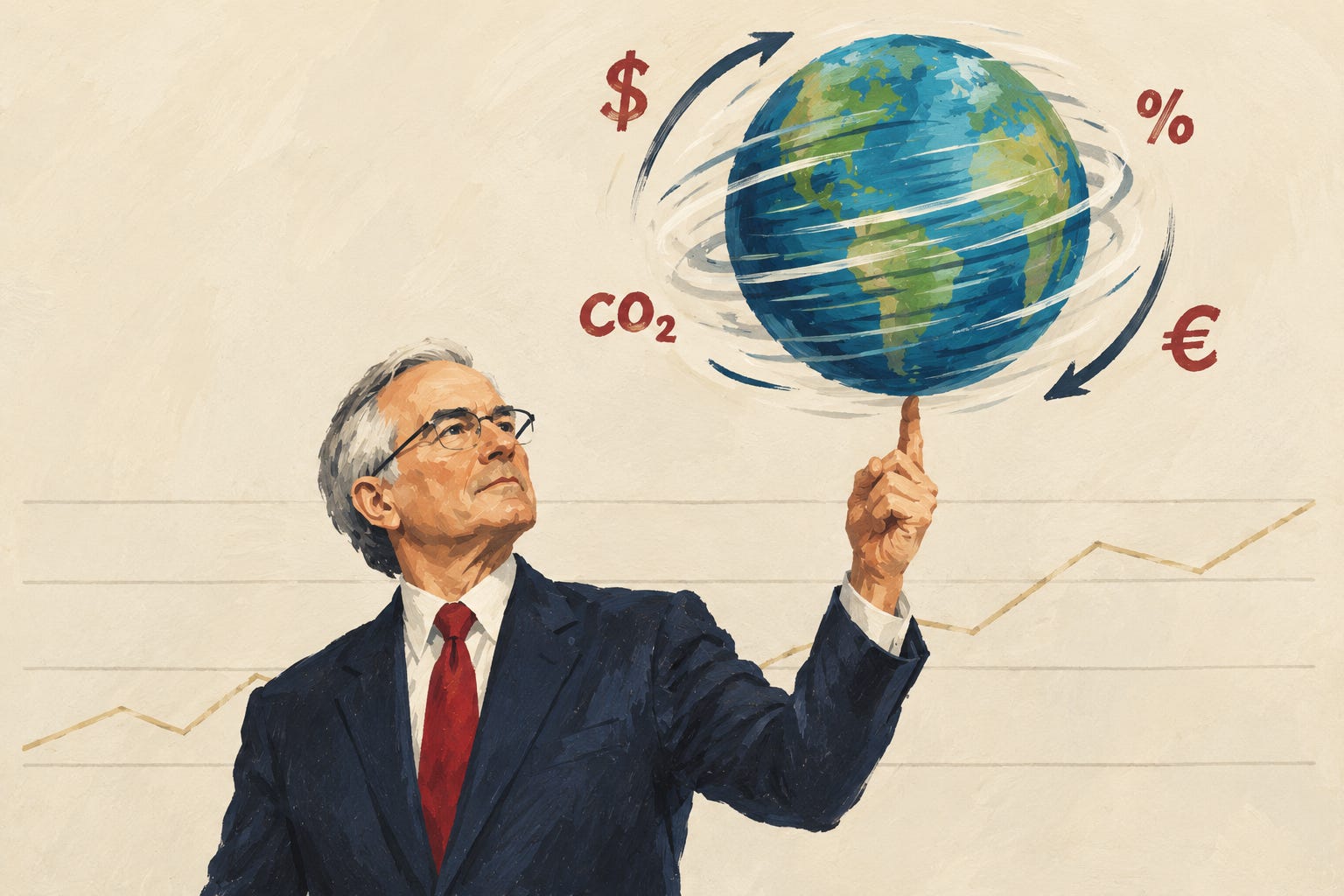
When Mark Carney, at the time head of Bank of England and Financial Stability Board, spoke at Lloyd’s of London in September 2015, he argued that climate change threatened financial stability. He spoke directly about economist Lord Nicholas Stern’s work from nearly a decade earlier:
once climate change becomes a defining issue for financial stability, it may already be too late. This paradox is deeper, as Lord Stern and others have amply demonstrated. As risks are a function of cumulative emissions, earlier action will mean less costly adjustment
Carney was referencing The Stern Review on the Economics of Climate Change. Stern is, as he was at the time of Carney’s speech, chair of the Grantham Research Institute at the London School of Economics.
This post answers the question:
How did climate change become a job for finance ministers, central banks, and regulators?
Claude’s TL;DR
The 2006 Stern Review used shaky methods but convinced finance ministries, banks, and investors that climate change is a financial risk.
Stern’s LSE/Grantham network gave that idea academic legitimacy working with support from NGOs, financial industry interests, and New Climate Economy.
Unburnable Carbon (2013) used the carbon budget to argue that fossil fuel assets would be stranded and threaten the financial system. The idea fed into IPCC reports and the TCFD, though the budget’s simple numbers hide big scientific uncertainties.
A small, overlapping group writes the science advisory reports, designs scenarios for use in those reports and industry risk tools that regulators, pension funds, and others rely on.
Nicholas Stern succeeded Joseph Stiglitz as Chief Economist for the World Bank. There he became known for his perspective that international financial institutions (IFIs) could work as agents of change for the investment climate.
In late 2003, Stern moved to the UK Treasury as Second Permanent Secretary and Head of the Government Economic Service under Chancellor Gordon Brown. There he also served as Director of Policy and Research for Prime Minister Tony Blair’s Commission for Africa.
The Commission’s report, released on March 11, 2005, named climate change as a headline matter for Africa’s economic development. Four days later, Brown used the report in a speech at the G7 Energy and Environment Ministerial Roundtable and went further:
We must make climate stability, energy investment and energy security central to economic policy.
Aid to Africa was a leading issue for Blair’s hosting of the G8 Gleneagles Summit in 2005. Blair pitched an International Finance Facility (IFF) to sell bonds, disbursing proceeds to existing bilateral and multilateral aid agencies. Donor countries would commit themselves to repaying the bonds in the years after 2015. The US did not accept the idea.
On the day Blair opened the Summit, 6 July, the House of Lords Select Committee on Economic Affairs published a report on “The Economics of Climate Change.” The Select Committee criticized the IPCC’s economic assessment of climate impacts.
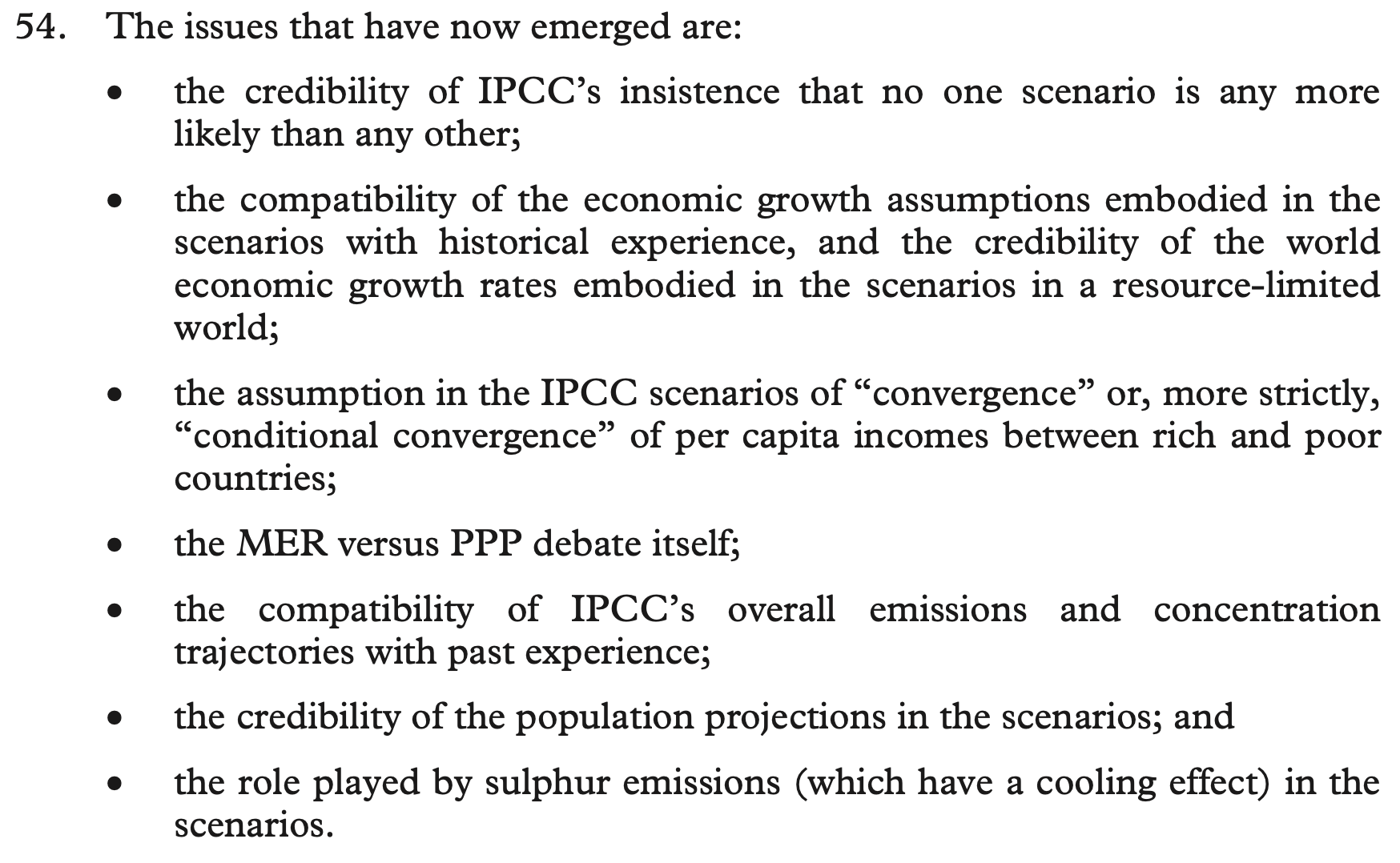
The Select Committee asked the HM Treasury to step in:
[The Committee] calls on the Government to give HM Treasury a more extensive role, both in examining the costs and benefits of climate change policy and presenting them to the United Kingdom public, and in the work of the Intergovernmental Panel on Climate Change (IPCC).
It continued:
We are concerned that UK energy and climate policy appears to be based on dubious assumptions about the roles of renewable energy and energy efficiency and that the costs to the UK of achieving its objectives have been poorly documented. We look to the Government, with much stronger Treasury involvement, to review and substantiate the cost estimates and to convey them in transparent form to the public.
Chancellor Brown took up the invitation, but not in the direction the Lords intended. Instead of scrutinizing the practices of the IPCC, Brown commissioned a 600+ page argument on the economic costs of not committing to a full scale energy transition.
The creation of global climate financial risk
Stern catapulted to international recognition in late October 2006, when the UK government released The Economics of Climate Change: The Stern Review.
From the outset, the Stern Review served a political purpose. It brought together Blair’s agenda of joining climate change and development, and efforts to work around American resistance to the Kyoto Protocol.
Michael Jacobs, a member of Brown’s Council of Economic Advisers, writes that he “originated and oversaw the Stern Review.” Jacobs had joined the Treasury from his position as General Secretary of the Fabian Society, a left political organization that founded the London School of Economics long ago and co-founded the UK Labour Party.
The Stern Review’s headline claims included:
The costs of a business as usual scenario “will be equivalent to losing at least 5% of global GDP each year, now and forever… the estimates of damage could rise to 20% of GDP or more.”
the costs of action “can be limited to around 1% of global GDP each year.”
“the rising costs of extreme weather events could affect global financial markets through higher and more volatile costs of insurance.”
“Climate change is the greatest market failure the world has ever seen, and it interacts with other market imperfections.”
Those headlines rested on hotly contested methodological choices:
The Review used a discount rate that defied convention and ignored standard investment principles
The Review treated the high population IPCC SRES A2 scenario, with 15 billion people by 2100, as business as usual.
The Review mistreated disaster loss trends, as documented in detail by Pielke (2007) and Pielke (2010).
The Review’s sensitivity analysis was used improperly; “had it been used properly—it would have falsified the analysis itself”
Nevertheless, the Stern Review was quickly adopted as a standard reference:
The IPCC AR4 Working Groups II & III cited it; the European Central Bank used it in their 2007 financial stability review; the European Commission used it to justify a tighter emissions cap… and Carney used it in his speech at Lloyd’s.
The Review cast a long shadow. In the United States, billionaire politicians built on it to launch the Risky Business Project, a politically motivated analysis that became as embedded in US debate and climate assessment reports as the Stern Review.
As a Treasury product, the Stern Review provided Western, advanced economy authority to the argument that climate change was a matter that finance ministers could, and should, address as part of their prudential responsibilities.
Yet Stern and his coauthors ultimately defended their methodological choices, not empirically but on precautionary and ethical grounds, dedicating an entire chapter to it and later writing:
It is surprising that the earlier economic literature on climate change did not give risk and ethics the attention they so clearly deserve, and it is because we chose to make them central and explicit that we think we were right for the right reasons.
LSE and the New Climate Economy
When Brown became Prime Minister in summer 2007, Stern moved to the London School of Economics. In 2008, the investor Jeremy Grantham, through his foundation, created a new institute there with Stern as its chair.
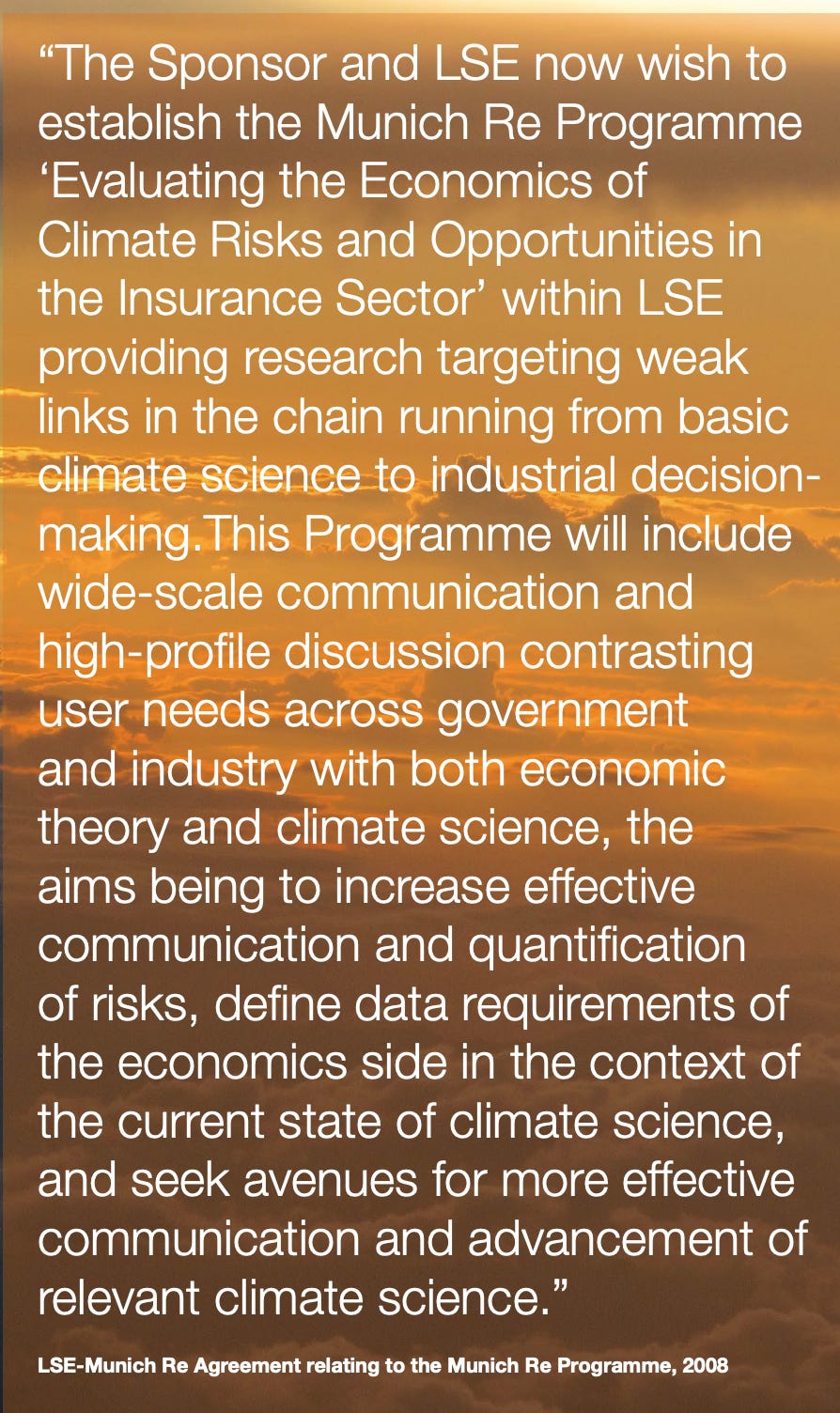
An account of these early days, explains that three funding streams came together at once: Grantham, Munich Re, and the UK Economic and Social Research Council (ESRC), which produced the LSE Grantham Research Institute alongside a Centre for Climate Change Economics and Policy (CCCEP) that included a program centered on reinsurance business interests funded by Munich Re.
The “LSE Munich Re Programme” portion built out climate risk as an asset class:
Mitigation and adaptation activities will bring about a plethora of new financial products, introducing new risks and opportunities into the financial sectors.
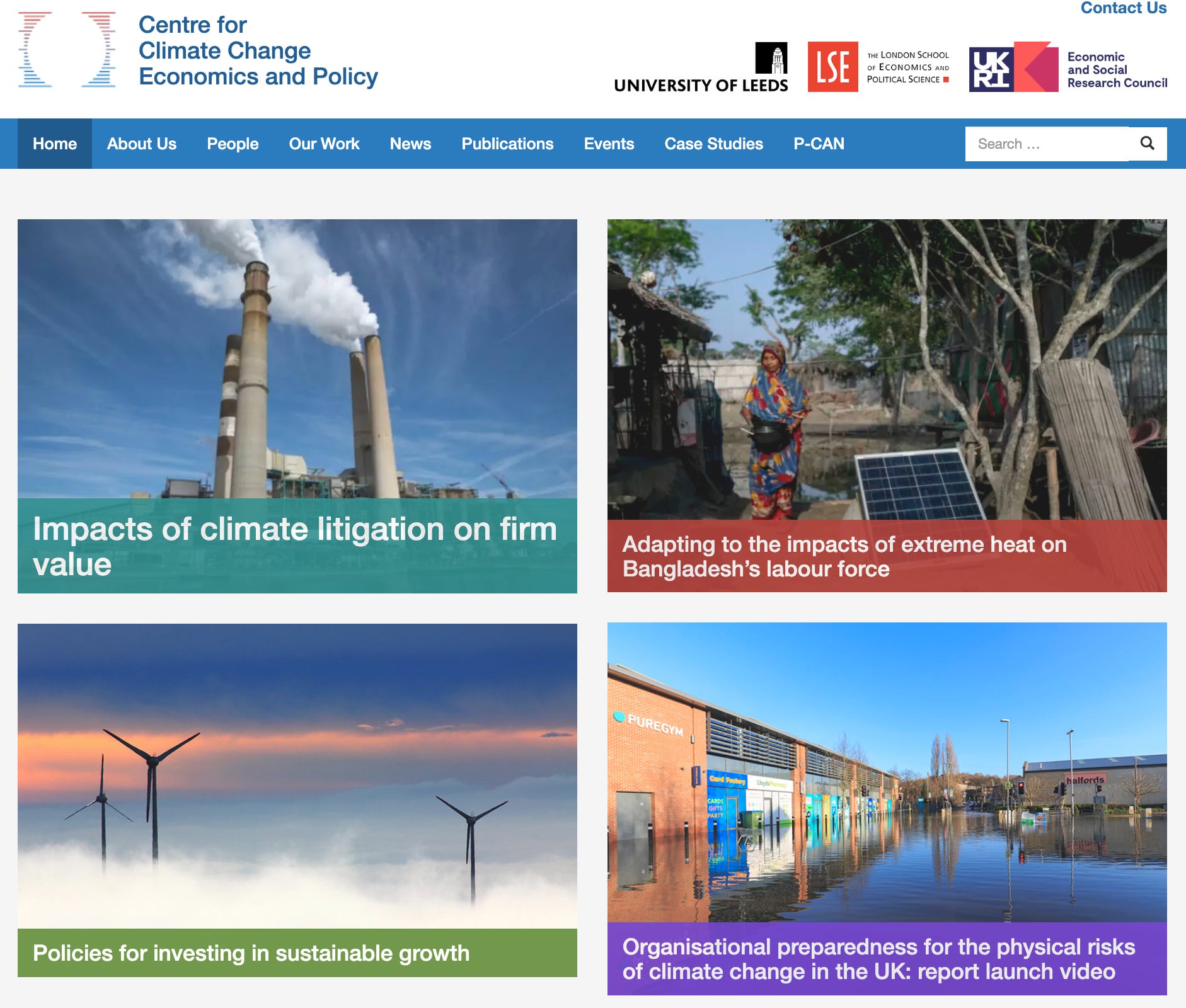
Collectively, the programing built out climate risk and an economic advocacy campaign supporting it.
Below is a screenshot of the current homepage of the CCCEP, the site reports that the program has ended. You can see through the visual representation of the coordinated financial, industrial, and political campaign. Note that Grantham is not named as engaged here but each of the four projects is linked to a Grantham Institute product.1 This is a singular advocacy storyline legitimized via connection to academic and research institutions.
The advocacy storyline is the depiction of climate risk itself: Investment policies for wind and solar manage the financial risk of climate change depicted in extreme weather (physical risk) and firm devaluation (transition risk). Picking off problems in the narrative stream is not the purpose of this paragraph; I mean only to show how scientific institutions are used to christen advocacy campaigns.
Today, the LSE/Grantham Institute has many funders, including financial institutions and US philanthropic foundations.
Making climate change into a global economic and financial issue required reaching beyond environmental ministries to financial ministries. Stern describes how this was done in his recent book:
increasingly and particularly post-Paris, it has been recognised that the responsibilities for climate action cannot be confined to the environment ministers, who have been the principal partners in the COP. For example, with [former president of Mexico] Felipe Calderón and working closely with Andrew Steer, then head of the World Resources Institute (WRI), in 2013, we founded the Global Commission on the Economy and the Climate (GCEC; usually termed the New Climate Economy (NCE)) to explore and emphasise the economy-wide importance of climate action.
Calderón chaired the GCEC with Stern as co-chair. The WRI, a US-based 501c(3), managed it, and McKinsey’s head of sustainability directed it.
In its initial year, the GCEC included current and former executives of Bloomberg LP, Bank of England, Swiss Re, Bank of America, Deutsche Bank (who was also chair of the European Climate Foundation), China Development Bank, China International Capital Corporation, World Bank, OECD, International Energy Agency, and Asian Development Bank. There were also several research partners.2
According to the McKinsey’s lead, the initiative
create[d] a platform that, within a year, built enough legitimacy to influence and help reframe the global debate.
The program has since ended and claims that its goal was met:
we have successfully built and disseminated a new narrative; it is now widely understood that economic growth and climate action go hand-in-hand.
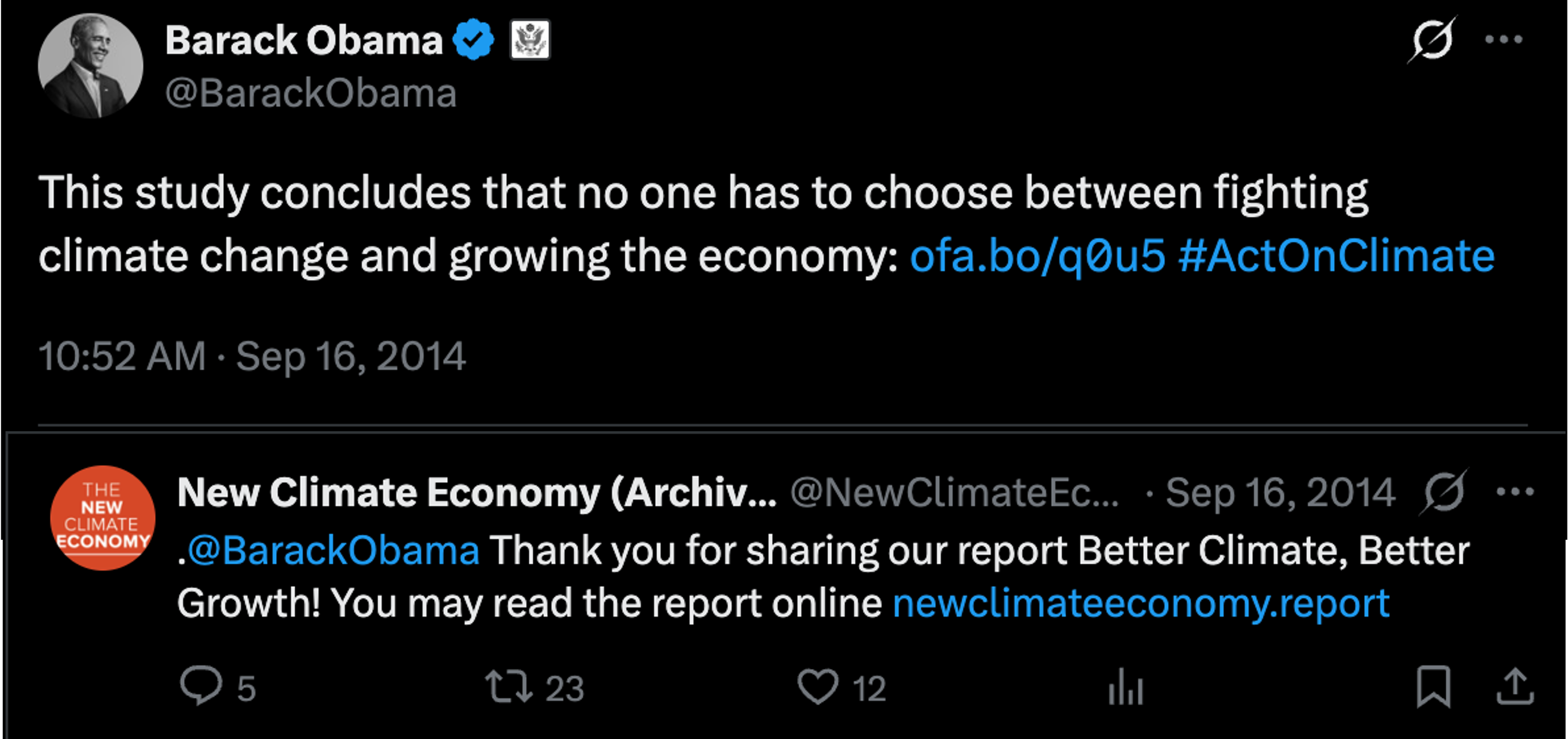
Though a clear articulation of the Commission’s “theory of change” is not spelled out, its membership and narrative point to one: framing climate change as a financial concern would make energy policy the purview of financial institutions, managed through investment flows, climate risk and emissions disclosures, and carbon pricing.
Of course, other goals that nations might also care about such as, energy security, affordability, and industrial capacity, drop out of that framing.
The Carbon Bubble
While the New Climate Economy was underway, Grantham/LSE elevated the narrative of a “carbon bubble” through an April 2013 report, Unburnable Carbon.
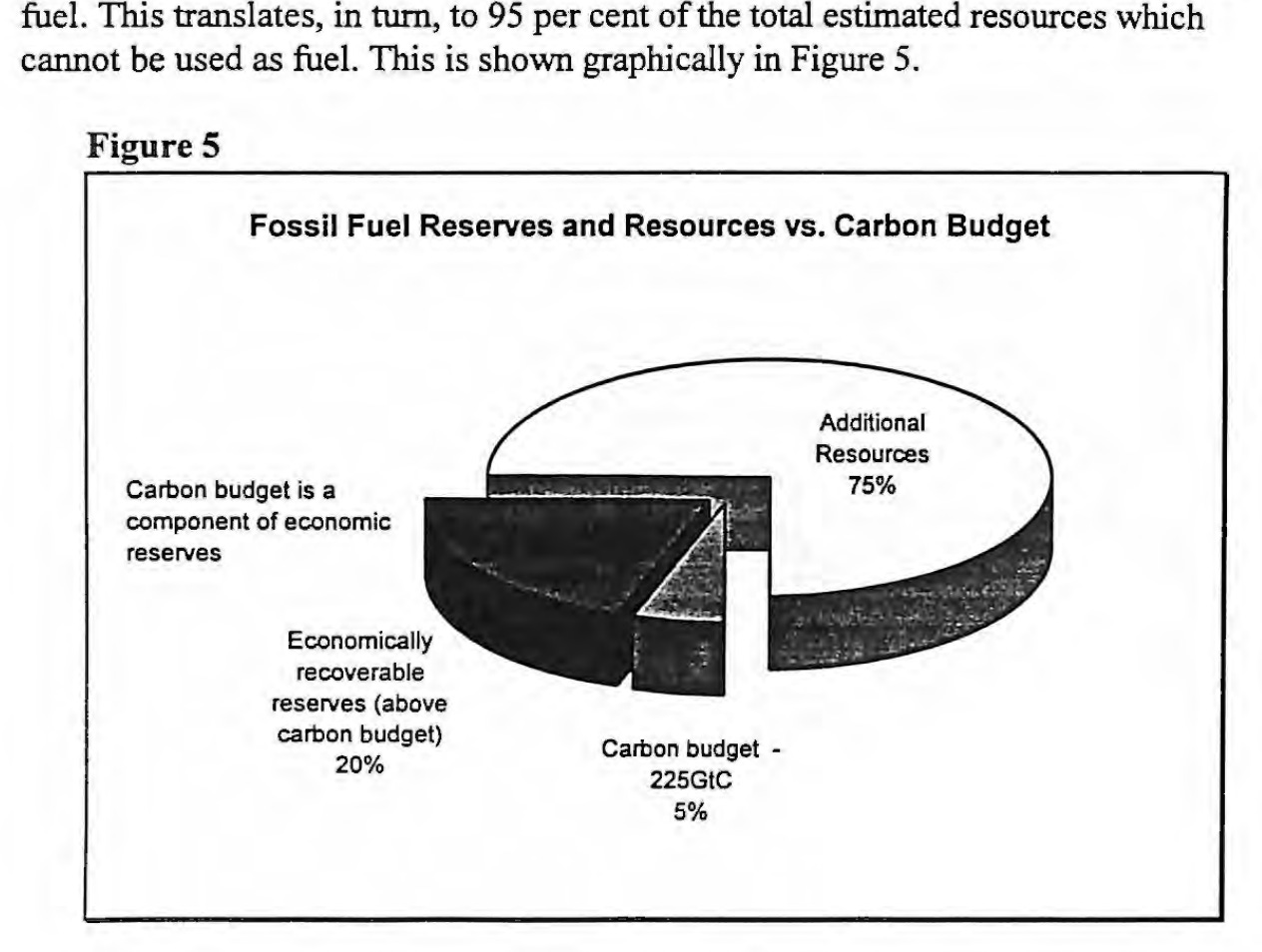
The argument rested on the premise of abiding a carbon budget that held warming to 2oC. Once the energy transition got underway, the remaining fossil fuel reserves would be “unburnable,” and the infrastructure built to extract and use them would become stranded assets. A massive market correction would ensue— this would be the bursting of century long carbon bubble.

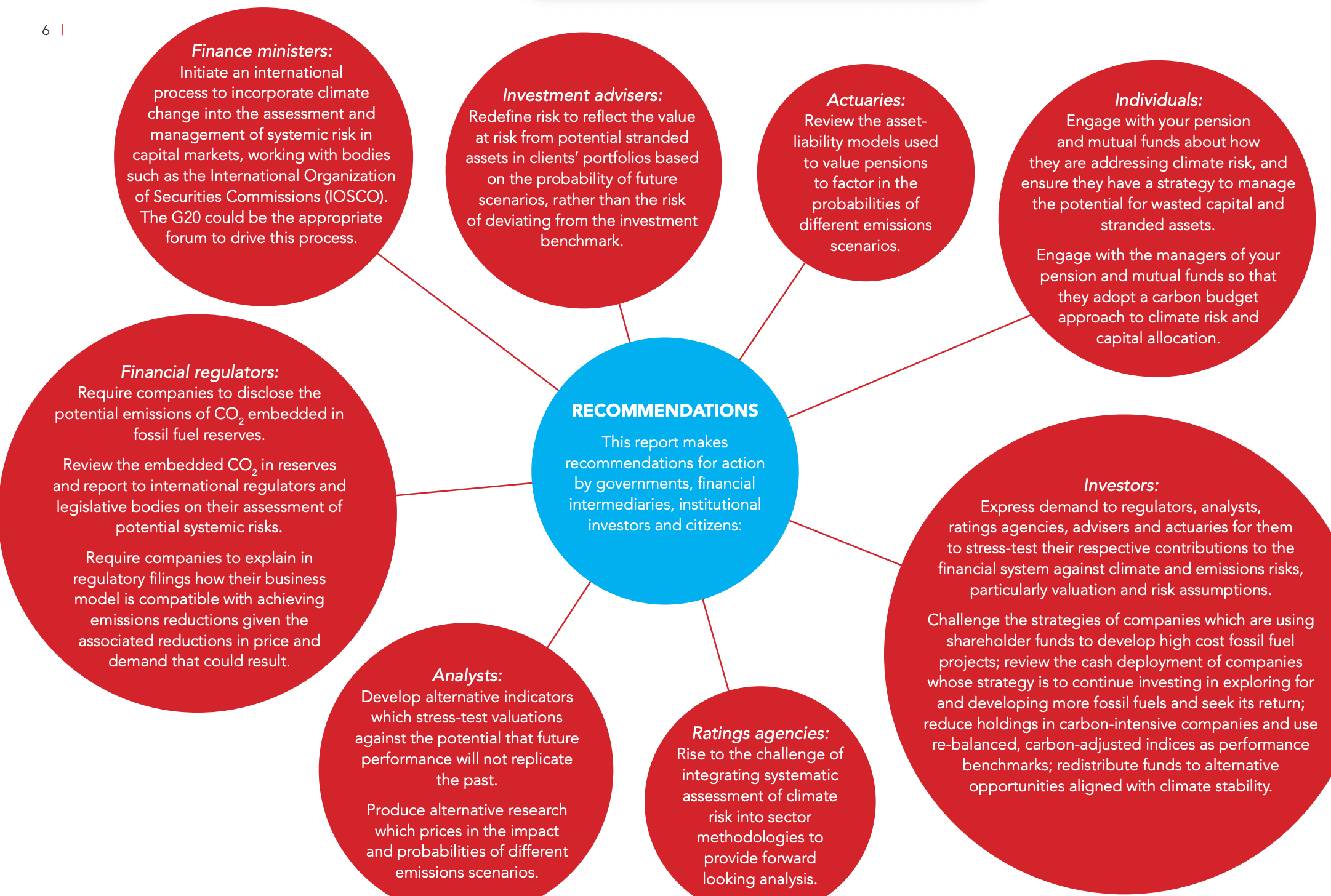
Carbon Tracker popularized the concept in 2011. The Grantham Institute housed at LSE, a university, gave the concept academic legitimacy. Their joint report called on the whole financial system — regulators, ministers, actuaries, investors — to demand and implement actions for “[e]volving the regulation of markets for climate risk.” One recommendation was to:
initiate an international process to incorporate climate change into the assessment and management of systemic risk in capital markets
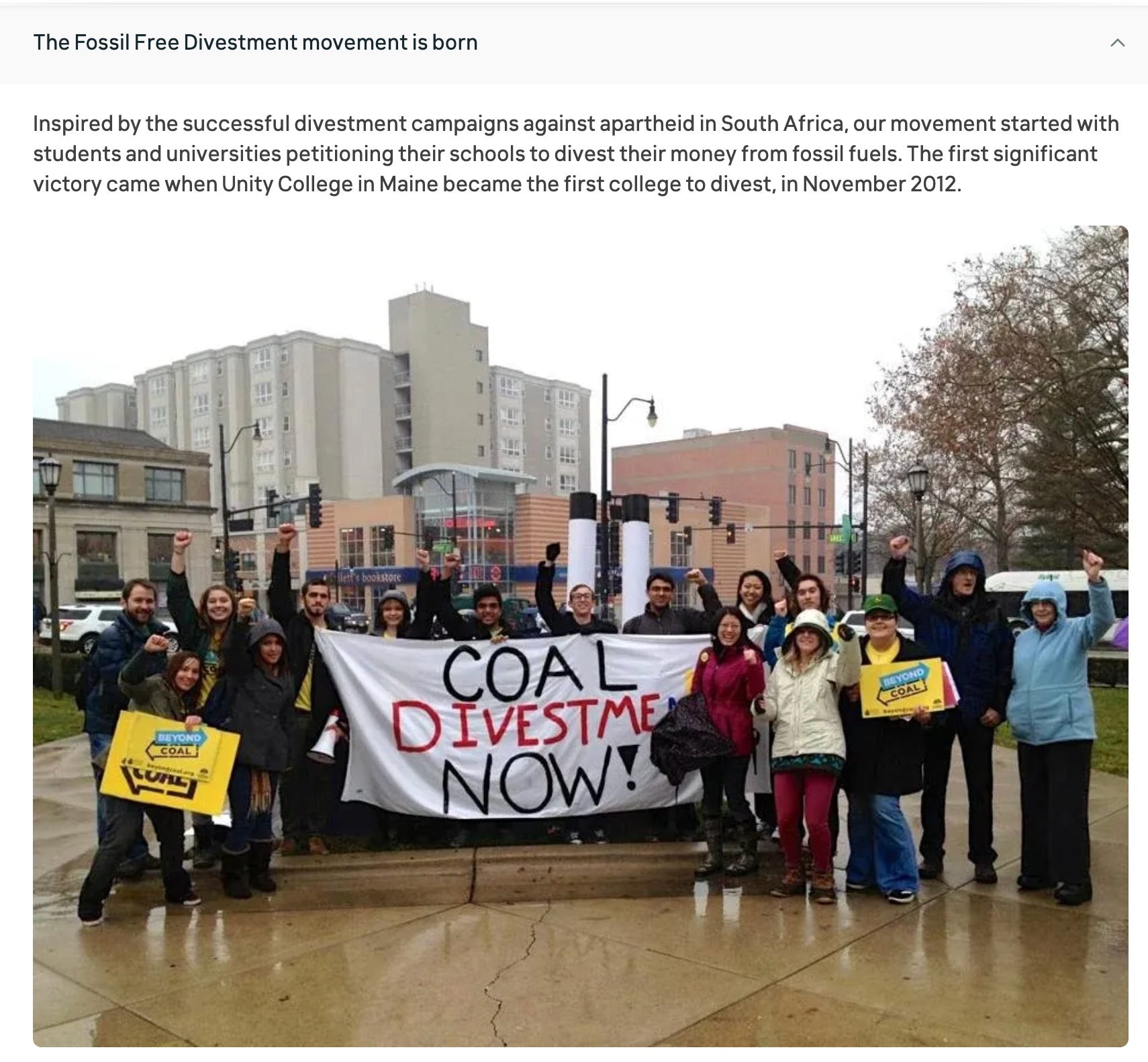
The report release aligned with the larger fossil fuel divestment campaign led by 350.org, which kicked off in 2012 and strengthened over the course of 2013.
June 2013. The UK Commons Environmental Audit Committee opens its Green Finance inquiry, discusses the “carbon bubble”
September 2013. The Carbon Asset Risk Initiative, coordinated by Ceres and Carbon Tracker and backed by NY State and City Comptrollers, send letters from investors to fossil fuel companies citing findings from the report.
Late 2013. Fossil fuel divestment campaign expands
March 2014. After a shareholder resolution from Arjuna Capital and As You Sow, part of the Ceres-run campaign, ExxonMobil agrees to publish a carbon asset risk report.
October 2014. Carney tells a World Bank seminar “The vast majority of reserves are unburnable.”
For its underlying carbon budget theory, Unburnable Carbon relied on Meinshausen et al 2009, a PIK-led team with coauthors at Oxford and ETH Zurich. The work integrated a linear relationship between CO2 emissions and temperature established in a companion paper, Allen et al 2009.
Eventually, the IPCC reporting reoriented around the carbon budget concept first in AR5. In AR6, finance was a specific mitigation lever; transition and mitigation pathways were repurposed for channeling investment activity around different temperature targets such as with the Science Based Targets initiative and the Transition Pathway Initiative.
Yet the carbon budget idea had long been an oversimplification. Critical commentators have noted that modeling assumptions create a wide range for ‘remaining budgets’
At best, the carbon budget concept is
“an elevator pitch to summarize the climate challenge in a few sentences”
In providing information to the TCFD on scenario analysis, Stern and Zenghelis cited the Unburnable Carbon report to argue that stranded assets presented systemic risk,
Our aim is to make sure that the top-down macroeconomic motivation for this exercise— the need to limit systemic risk through an orderly adjustment in asset valuation, prevent avoidable financial loss and avoid locking in to stranded assets—is clearly integrated into the framing of the programme, in order to ensure the most effective provision of relevant information to investors. (bold mine)
Et voilà, financial climate risk.
Meanwhile, back in California
You can see these logics at work in the largest public pension in the United States, CalPERS, reporting on climate risk.
On the left hand side of the image is CalPERS “climate VaR” analysis showing impact to its portfolios given different warming temperature targets. On the right hand side is how CalPERS responds to this ‘analysis’ through its investment activities.
Whoever controls the Climate VaR analytics framework controls California’s public pension investment activities.
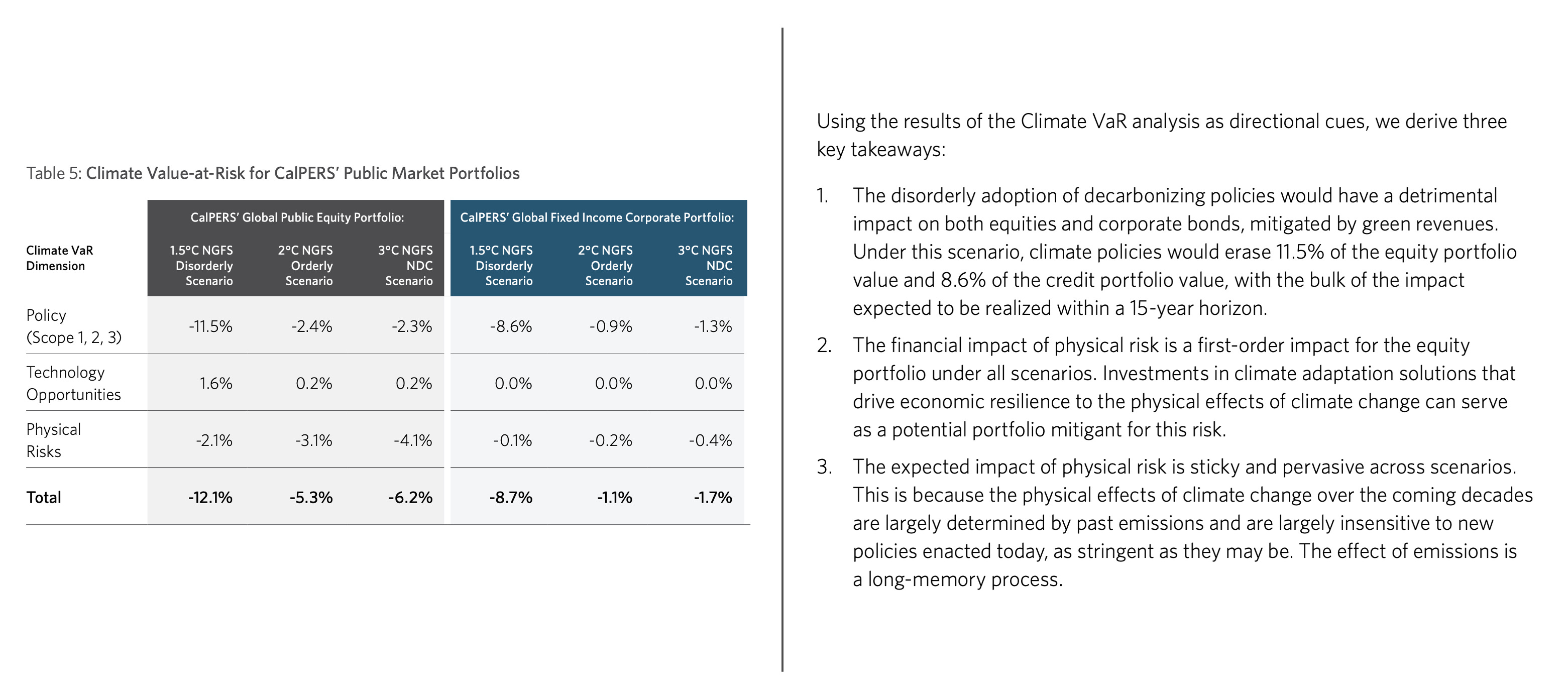
The financial regulatory regime embeds the advocacy narrative created to usher in the regulatory regime and secure the policies preferred by a select few.
Next, we’ll turn to the China Council for International Cooperation on Environment and Development (CCICED), China’s green finance, and some closely networked folks.
Below, you’ll find a sidebar with some additional notes that I am working on.
Sidebar: Carbon budget, Climate Var, & end to end rhetorics
The carbon budget idea itself dates to the 1980s, but most saliently to a Greenpeace report by Bill Hare. He was also a coauthor on Meinshausen et al 2009. Recall, that a Greenpeace report on insurance and climate change written by Jeremy Leggett was cited in the PRA report that resulted in Carney’s Lloyd’s speech. Both Hare and Leggett held senior positions at Greenpeace in the mid to late 1990s. Leggett went on to market the carbon bubble as a financial idea through Carbon Tracker. Hare marketed it as a science and policy idea through Climate Analytics, an analytics firm cofounded with his coauthor and lead author Meinshausen et al.
Writing in 2019, researcher Bård Lahn gives a full history of the global carbon budget concept originating as a deliberate abstraction for advocacy, becoming a quasi-scientific construct, later used as a rhetorical device of responsibility, and finally as a contested claim of knowledge about the physical climate system.
The Oxford researchers, Allen and colleagues, had been active in aligning legal and scientific inquiry on climate change. A near linear relationship between a ton of CO2 and temperature coupled with a carbon budget created the rhetorical structure for moving from warming to events to emission to emitters.
Yet, uncertainty about the physical system that plagued the climate change research field for decades was only reframed, if also made more complex: instead of asking how much warming from a given CO2 concentration, the budget question became how much to emit for a given amount of warming.
The simplified carbon budget concept provides an assertion on which to create an analytics chain running from historical emissions to firm portfolios used by, for instance, “financial institutions to evaluate emissions attributable to sovereign debt.”

Recall the Climate Var calculation discussed in the above post.
An insurer-sponsored report by the Economist Intelligence Unit applied the Stern Review’s discounting assumptions and a Stern-lineage damage function to estimate a “Climate Value at Risk,” using high emissions from high per capita growth rather than high population. TCFD later cited the EIU report estimate to argue that climate change threatens financial assets economy-wide. Whatever its underlying assumptions, Climate VaR became a central framework for climate risk reporting and guiding investments, notably at public pensions such as CalPERS.
The EIU climate VaR analytics were provided by Vivid Economics, a consultancy founded in 2006 and whose principal includes a Stern Review co-author turned LSE/Grantham researcher (see also Dietz et al 2016). McKinsey acquired Vivid Economics in 2021. CalPERS contracts to MSCI’s ClimateVaR analytics which is built on Carbon Delta, a Zurich outfit acquired in 2019.
2018 documentation states that Carbon Delta “uses the REMIND model developed by [PIK]” to estimate the costs of emission reductions per company. MSCI also claims “Our data sources and assessment methods have been established with input” from PIK. As well, PIK was involved in developing the NGFS scenarios- the development of which was funded by Bloomberg Philanthropies and Climate Works.
Note the link this creates: US foundation money funds a German think tank’s model development to feed into an international regulatory regime via TCFD/NGFS to guide investment decisions at CalPERS
As it happens, many of the same people are engaged in designing the IPCC emissions scenarios and transformation pathways, while also designing scenarios for regulation (NGFS), and providing analytics for financial institutions, and currently or previously working within institutions pursuing policy changes that would require the regulations.
In short, the IPCC science advisory reports have design elements created by those whose business it is to guide financial institutions into abiding the science advice of the IPCC which is oriented around UNFCCC agreements. Climate risk regulations create demand for the system; political advocacy keeps the system together— as it is most certainly not held together on scientific merit alone.
Stern’s work comes through under the sustainable growth image.
These were listed as: World Resources Institute (WRI, Managing Partner), Climate Policy Initiative (CPI), Ethiopian Development Research Institute (EDRI), Global Green Growth Institute (GGGI), Indian Council for Research on International Economic Relations (ICRIER), LSE Cities, Stockholm Environment Institute (SEI) and Tsinghua University
Thanks Jessica. Although my group initially embraced the Stern Report, we went ahead and made a simple model of what they had done. By changing the discount rate (actually unknown and highly variable) you could actually get about any result of future economics you want. So, we dropped using the Stern repot since it was easy to demonstrate it was completely unreliable.
It appears that there is a conspiracy to support the unsupportable claim of climate change as these ideologues have. Maybe it is time to go after the low hanging fruit that serves a the foundation for such a grand scam and work one's way up to the top. Certainly no reasonable progress necessary to mitigate for climate change as they presented it took place. The harm to humanity is provable and needs to be brought up to hold those involved in this scam responsible for their harm to humanity.